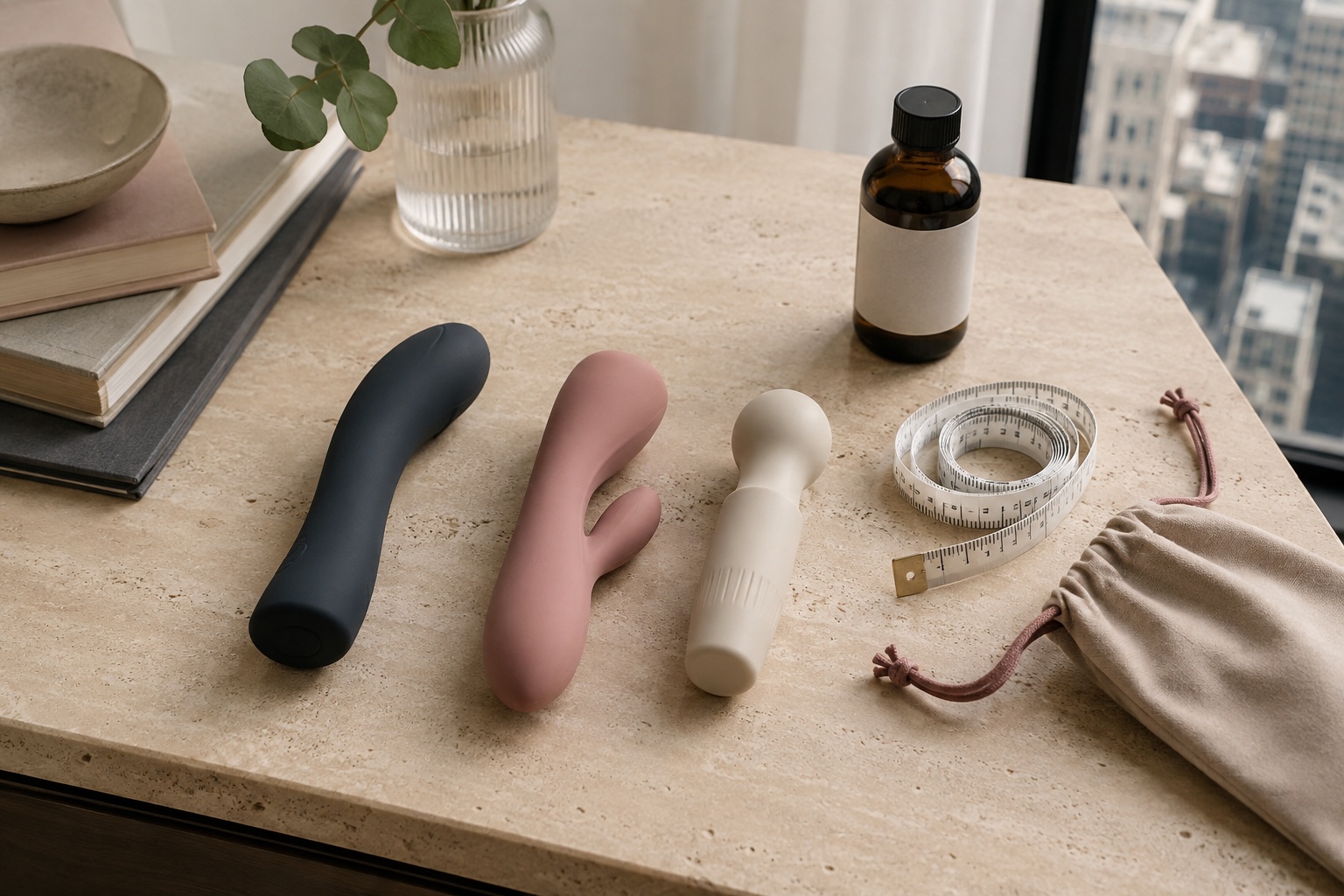
In a Manhattan apartment, the best adult toy may be the one that is easy to store, simple to charge, comfortable to use, and suited to your actual space. Compact living does not require a compromise on quality; it rewards better planning.
What apartment-friendly really means
A size that fits your body and your available storage.
Controls you can change without fumbling.
A charging routine that works with limited outlets.
Noise expectations that match a shared or small space.
Materials and care instructions you can maintain easily.
Choose compact adult toys by function
Compact does not have to mean underpowered, and large does not automatically mean more effective. Start with function. For external stimulation and small storage footprints, explore bullets and discreet vibrators. For broad massage and flexible use, browse personal massagers. Always review dimensions and features on the individual product page.
How to think about sound in a small apartment
No product is silent in every setting. Sound changes with speed, surface, room size, and what the product touches. A device that seems quiet in the air may sound different against furniture or inside a resonant bathroom. If noise matters, look for compact motors and multiple intensity levels, and avoid judging only by marketing language.
Soft furnishings can reduce room echo, but the safest approach is choosing a time and setting where you feel comfortable. A travel lock also helps prevent an accidental start in a drawer, bag, or shared closet.
A clean, dry pouch and an easy-to-reach charging setup keep a small collection organized.
Build a simple charging and storage routine
Before buying, check whether the product uses USB, a magnetic cable, replaceable batteries, or another connection. Proprietary cables should be labeled and stored with the product so they do not disappear into a drawer of unrelated chargers. Rechargeable products should be charged according to the manufacturer’s instructions.
Allow a cleaned product to dry completely before storing it. Keep products separated when the instructions recommend it, and do not leave them pressed against materials that may react with the surface. A washable pouch, dedicated case, or divided drawer can keep everything private and easy to find. Browse storage and toy care for options.
Measure before you order
A product’s overall length is not always its insertable or usable length. Width, handle size, charger clearance, and the dimensions of a storage case also matter. Compare the listed measurements with a familiar object or ruler. This one-minute check is especially helpful when your bedside storage is shallow or shared.
Keep cleaning practical
Follow the product’s care instructions and waterproof rating. Water-resistant and waterproof do not always mean the same thing. Use a compatible cleaner when recommended, rinse only when the instructions allow it, and pay attention to seams and charging ports. For lubricant, confirm compatibility with the toy material; the lubricant comparison guide explains the basic differences.
Plan a secure Manhattan delivery
Use the complete building and apartment information, and choose an address where the parcel can be received securely. If your building has a doorman, package room, or access code, make sure the delivery details are accurate. Shipping choices and current charges appear at checkout. Review the shipping information and the broader New York delivery guide before placing the order.
Manhattan apartment FAQs
Are compact products only for beginners?
No. Compact describes size, not intensity, quality, or experience level. Read the specifications and choose according to your preferences.
What should I keep in a storage kit?
A product-specific charging cable, a clean pouch, care supplies approved for the item, and its instructions are a practical foundation. Store lubricant according to its label and check expiration dates.
How do I compare noise online?
Use noise claims as one factor, not a guarantee. Product size, motor type, intensity settings, room acoustics, and contact with furniture can all change the experience.
Find a better fit for a smaller space
Compare compact, in-stock options by dimensions, controls, material, care, and charging—not size alone.
Adult toy delivery in New York is easiest when privacy and logistics are considered before checkout. A correct address, a suitable shipping choice, secure package handling, and a clear understanding of store policies can prevent most avoidable problems.
Before you place the order
Confirm the recipient name, street address, unit, and ZIP code.
Choose a shipping method that fits when the package can be received.
Review the current shipping charge and order total at checkout.
Use an email address and phone number you control.
Read the return and privacy policies before purchasing.
What discreet delivery should help protect
Discretion is more than the outside of a parcel. It also includes how order confirmations are sent, where tracking messages appear, who can access the delivery location, and what happens if the address is incomplete. Use a private email account when possible and avoid shared-device notification previews if that matters to you.
Packages are shipped discreetly, but the carrier still needs accurate delivery information. Your name, address, and any necessary building details must be complete for reliable delivery. Review IntimateMart’s privacy policy for information about website data practices.
Choose a New York delivery address carefully
New York addresses can involve apartment numbers, doormen, package rooms, locked vestibules, office mailrooms, or limited delivery windows. Enter the address exactly as the building recognizes it. Double-check directional street names, unit numbers, borough, and ZIP code. If a building has a reliable package room, confirm how residents are notified and how long packages are held.
Do not assume a change can be made after fulfillment begins. The best time to catch an error is before submitting checkout.
Use an accurate delivery address and choose a shipping option that fits when someone can receive the package.
Shipping options, timing, and cost
Available shipping methods and charges are presented during checkout. Choose from the current options based on your timing and budget, then review the full order total before payment. Shipping estimates are business-day estimates, not appointment windows, and carrier conditions can affect delivery.
Because rates and availability can change, rely on the checkout calculation and the current shipping and delivery policy rather than an older screenshot or saved estimate.
Tracking and package reception
Keep the order confirmation until the order is complete. When tracking becomes available, use it to plan for reception, but remember that scans can update at different points in a carrier’s network. If someone else receives packages in your building, decide whether you are comfortable with that arrangement before ordering.
Inspect the parcel soon after delivery. If the shipment appears damaged or the contents are incorrect, keep the packaging and contact support promptly with the order number. Do not publish personal information or order details in a public comment or social post.
Know the return policy before buying
Intimate products can have stricter return rules for hygiene and safety reasons. Read the product details and the current refund and returns policy before purchase. If an item arrives damaged, defective, or incorrect, contact support within the stated window and wait for instructions before sending anything back.
Delivery questions for New York shoppers
Will the package reveal what is inside?
Packages are shipped discreetly. Necessary carrier information still appears on the shipping label, so use an address where you are comfortable receiving a parcel.
Can I choose the exact delivery time?
Shipping methods provide estimated transit timing rather than an exact appointment. Carrier scans and building procedures affect the final handoff.
What if my New York apartment address is complicated?
Use the format accepted by your building and carrier, including the correct unit and ZIP code. Confirm that the destination can securely receive packages before ordering.
Shop with delivery already planned
Browse in-stock products, compare the details, and review the current delivery options and full total at checkout.
Shopping for adult toys in NYC should feel informed, private, and straightforward. The best choice is not simply the most popular product. It is the one that fits your intended use, comfort level, living space, care routine, and budget.
A quick NYC shopping checklist
Start with the experience you want, not a trend.
Check dimensions, controls, power source, and care instructions.
Prefer clear material information and compatible lubricant guidance.
Plan for charging, cleaning, and discreet storage.
Review the shipping choice and delivery address before checkout.
Start with the experience, not the product name
Product catalogs can be overwhelming when many items look similar. Narrow the field by deciding whether you want an external sensation, internal use, hands-free convenience, a couples product, or a compact everyday option. First-time shoppers often benefit from simpler controls and a moderate size, while experienced shoppers may prioritize a specific shape, power pattern, or feature.
Explore by purpose: browse vibrators, male masturbators, and couples toys. Descriptive filters and product specifications are more useful than choosing from the image alone.
Compare size, controls, materials, care instructions, and storage before choosing.
What to compare before buying adult toys online
Dimensions and shape
Read the measurements. A clean product photo does not always communicate scale, and packaging can make an item appear larger or smaller than it is. Length, insertable length, width, and handle size can all affect comfort and storage.
Controls, charging, and noise
Think about how you will actually use and charge the product. Button placement, travel locks, rechargeable batteries, waterproof ratings, and removable controls may matter more than the number of modes. If privacy in a shared NYC apartment matters, choose compact products with straightforward controls and keep expectations realistic: noise can vary by setting, surface, and room.
Materials and lubricant compatibility
Look for specific material information rather than vague language. Follow the manufacturer’s instructions for cleaning and lubricant compatibility. Water-based lubricant is a versatile starting point for many products, but the correct choice depends on both the toy material and your preferences. See the personal lubricant guide or browse lubricants.
Plan for care and discreet storage
A good purchase should fit the routine after it arrives. Clean the product according to its instructions, allow it to dry fully, and store it away from heat, direct sunlight, and items that could damage its surface. Separate storage pouches can help keep a small collection organized. Browse storage and toy care for practical options.
Discreet delivery in New York City
Before checkout, confirm the apartment number, building access instructions, and an address where the package can be received securely. Available shipping methods, timing, and charges are shown during checkout; review the current shipping and delivery information before ordering. For a deeper look at package planning, read the adult toy delivery guide for New York.
Common questions from NYC shoppers
What is a good first adult toy?
A simple, compact product with clear controls and detailed material information is often easier to learn. Choose according to the type of sensation you want and check dimensions rather than relying on labels such as “beginner.”
How can I shop more privately?
Use your own device and email account, review the store’s privacy policy, and send the order to an address where you can receive it securely. Keep confirmation and tracking messages private if you share an inbox or device.
Should I buy the cheapest option?
Price alone does not tell you whether a product suits you. Clear specifications, material details, care instructions, intended use, and the retailer’s policies are better comparison points.
Explore adult toys with a clearer plan
Use the checklist above to compare in-stock products by purpose, size, material, care, and storage—not hype.
This guide provides general shopping and care information. Always follow the instructions supplied with a product and choose only items intended for your use.
The best personal lubricant is not simply the slickest bottle on the shelf. It is the formula that fits the products you use, the barriers you rely on, the setting you have in mind, and the cleanup you prefer. This guide compares water-based, silicone-based, and oil-based lubricants so you can make that choice with more confidence.
The quick answerWater-based lubricant is the most flexible starting point for many people. Silicone-based lubricant is a strong option when longer-lasting glide or water resistance matters. Oil-based lubricant can work well for external massage, but it requires the most careful compatibility check—especially when latex barriers are involved.
Personal lubricant types at a glance
Formula names describe the base of a lubricant, not every ingredient or every possible use. Two water-based products can feel very different, and individual silicone- or oil-based formulas may carry different compatibility instructions. Treat the table below as a decision shortcut, then confirm the directions on the exact product and any condom, barrier, toy, or intimate device you plan to use with it.
Formula
Typical feel
Best starting use
Cleanup
Compatibility check
Water-based
Light to cushioned, depending on thickness
Everyday use, beginners, and product versatility
Usually rinses away easily with water
Often broadly compatible, but always read both labels
Silicone-based
Very slick and slow to dry
Longer sessions or water-resistant use
May need soap and more thorough washing
Check silicone-toy and device instructions before use
Oil-based
Rich, smooth, and massage-like
External touch or massage when the label permits
Can be harder to remove and may mark fabric
Do not assume barrier compatibility; oils can damage latex
Different formula bases create meaningful differences in texture, longevity, cleanup, and compatibility.
Water-based lubricant: the versatile starting point
Water-based lubricant is often the easiest category to understand and the simplest place to begin. These formulas can range from thin and barely noticeable to thicker gels with more cushioning. They generally clean up with water, are less likely to leave an oily residue, and are commonly offered in unscented, flavored, warming, cooling, and sensitive-skin variations.
The tradeoff is longevity. Because the water in the formula can evaporate or absorb, you may need to add more during use. A small amount of water can sometimes refresh a water-based lubricant, but follow the package directions rather than diluting a formula unnecessarily.
Choose water-based when:
You want a flexible first lubricant without a complicated cleanup routine.
You plan to use lubricant with different product materials and want a broadly useful option.
You prefer a lighter feel or want a formula that rinses away easily.
You are willing to reapply when a longer session calls for it.
Browse the current personal lubricant collection and use the product details—not the category name alone—to confirm compatibility.
Silicone-based lubricant: longer-lasting glide
Silicone-based lubricants do not rely on water as their primary base, so they tend to remain slick longer and resist washing away in a shower or bath. That makes them useful when frequent reapplication would interrupt the moment. A small amount can travel farther than expected, so begin with less and add only what you need.
The main question is material compatibility. Some manufacturers advise against pairing silicone lubricant with certain silicone toys or devices because the materials may interact; other products are tested for specific combinations. There is no substitute for checking both labels. If both manufacturers permit it, follow any spot-test directions on an inconspicuous area before full use.
Choose silicone-based when:
You prioritize lasting glide over the fastest cleanup.
You want a formula that will not rinse away quickly in water.
Your product, device, and barrier labels all confirm compatibility.
You prefer using a smaller amount and reapplying less often.
Oil-based lubricant: rich feel with important limits
Oil-based formulas can offer a rich, massage-friendly feel and may stay workable for a long time. They can be appealing for external touch, but they also require more planning. Oils can linger on skin, require a more thorough wash, and stain some fabrics. Put down a washable towel if the label suggests that transfer is possible.
Barrier safety comes firstThe CDC and FDA advise against using oil-based lubricants with natural-rubber latex condoms because oils can weaken latex and increase the risk of breakage. Never assume that “natural” means compatible. Check the lubricant label and the exact barrier material before use.
If condoms or other barriers are part of your plan, start by checking their package instructions. The FDA notes that a personal lubricant may or may not be compatible with natural-rubber latex, polyisoprene, or polyurethane depending on the particular formula and its testing. Product-specific labeling should guide the final choice.
How to choose the right lubricant in five steps
1. Start with barriers, not texture
If you will use a condom or another barrier, identify its material before choosing lubricant. Check both packages for an explicit compatibility statement. This is more reliable than a broad rule copied from a product category page.
2. Check every toy or device material
Look at the care instructions for each product you plan to use. “Body-safe” and “silicone” do not automatically answer every compatibility question. A manufacturer may recommend a particular lubricant base, prohibit another, or provide a spot-test method.
3. Decide how long you want it to last
For a simple, easy-to-clean experience, a water-based formula may be enough. If you want longer glide or expect water exposure, a compatible silicone-based formula may suit the setting better. For external massage, an oil-based formula can be considered when barriers and product materials are not a conflict.
4. Choose your sensory preferences
Thickness, scent, flavor, warming or cooling ingredients, and finish can change the experience as much as the base formula. If you prefer simplicity, begin with an unflavored, unscented option and a shorter ingredient list. If you know you enjoy a sensory effect, choose one clearly designed and labeled for the intended use.
5. Plan for cleanup and storage
Consider skin, sheets, clothing, toys, and the room where you will use the product. Keep the bottle securely closed, store it as directed, and check the expiration date. Do not transfer lubricant to an unlabeled container; the original packaging keeps the ingredients, directions, warnings, and date together.
Keep the original packaging, follow the storage directions, and recheck the label when pairing products.
What to read on the label
Base formula: water, silicone, oil, or a hybrid.
Intended use: confirm that the product is designed for the way you plan to use it.
Condom and barrier compatibility: look for the exact materials named, not a vague “condom safe” assumption.
Toy or device compatibility: compare the lubricant directions with the manufacturer’s care guide.
Ingredients and sensory additives: note fragrances, flavors, warming agents, cooling agents, and any ingredient you already know you avoid.
Cleaning and storage: follow the recommended washing method, temperature range, and expiration guidance.
Common lubricant mistakes to avoid
Assuming every product in one category behaves the same. The base is only the beginning; thickness and additives matter too.
Skipping the barrier-material check. Compatibility must be confirmed before use, especially with oil-based formulas.
Using more before understanding the texture. Begin with a small amount, then add gradually.
Ignoring cleanup instructions. A long-lasting formula may need a different washing routine than a water-based gel.
Continuing after discomfort begins. Stop using a product if it causes burning, irritation, pain, or another unwanted reaction, and seek qualified medical guidance when appropriate.
Frequently asked questions
What is the best lubricant for beginners?
A simple water-based lubricant is a practical starting point for many beginners because it is generally easy to apply and clean. Choose based on the exact barrier and product materials you use, and read the complete label before making the final decision.
Can silicone lubricant be used with silicone toys?
Compatibility varies by product. Some manufacturers advise against the pairing, while others provide testing or care instructions. Follow the directions from both manufacturers and use a spot test only when those instructions permit one.
Can oil-based lubricant be used with condoms?
Do not use oil-based lubricant with natural-rubber latex condoms. Oils can weaken latex. Other barrier materials also require product-specific confirmation, so read both labels rather than assuming an oil formula is compatible.
Why does water-based lubricant become sticky?
As water evaporates or absorbs, some formulas can feel tackier. Reapplication may help, and some labels allow the formula to be refreshed with a small amount of water. Follow the specific product directions.
Should personal lubricant be patch tested?
Follow the manufacturer’s directions. If a label recommends a patch test, use the stated method. Stop use if irritation or another unwanted reaction occurs.
Find your formula
Compare water-based, silicone-based, oil-based, flavored, warming, and specialty options in the IntimateMart lubricant collection. Check each product page and package label for the most current directions and compatibility information.
Editorial note: This educational guide was prepared by the IntimateMart Editorial Team using current CDC and FDA consumer guidance and product-label conventions. It is general information, not medical advice. Product formulations and instructions can change; always follow the current package label and consult a qualified healthcare professional about individual health concerns.
Your privacy
We use essential cookies to run the store and analytics cookies to understand site use. You can accept or manage your choices.
Functional
Always active
The technical storage or access is strictly necessary for the legitimate purpose of enabling the use of a specific service explicitly requested by the subscriber or user, or for the sole purpose of carrying out the transmission of a communication over an electronic communications network.
Preferences
The technical storage or access is necessary for the legitimate purpose of storing preferences that are not requested by the subscriber or user.
Statistics
The technical storage or access that is used exclusively for statistical purposes.The technical storage or access that is used exclusively for anonymous statistical purposes. Without a subpoena, voluntary compliance on the part of your Internet Service Provider, or additional records from a third party, information stored or retrieved for this purpose alone cannot usually be used to identify you.
Marketing
The technical storage or access is required to create user profiles to send advertising, or to track the user on a website or across several websites for similar marketing purposes.